
Ajit Balakrishnan on mapping the Business Serengeti.

Sales of four- and two-wheelers almost halved in August, compared to the equivalent month last year.

Out of 24,230 IIT and NIT grads, about 8,000 students didn't find any takers during campus placement drives this year.

Changing tracks helps. But, not taking the beaten path isn't always helpful. This is the story of two of India's biggest privatisations - Air India and Bharat Petroleum (BPCL). Nearly two decades after the last privatisation, a landmark divestment concluded this year when the loss-making national carrier Air India was sold to the Tatas.

No government can 'ignore inclusiveness in a democracy', Montek Singh Ahluwalia tells Anjuli Bhargava.
.jpg)
For India to invoke "sovereign" or "state" immunity to safeguard its foreign assets, which are under threat of getting seized in the intensifying legal battle with Cairn Energy, may come with several riders. Experts point out that the Indian government has to first satisfy the French court that the properties or assets that are under consideration are being used to dispense the state's sovereign functions.
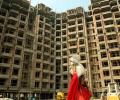
Owing to the risk perception attached with the segment by banks, the residential realty segment has been increasingly relying on non-banking financial companies and housing finance companies to raise debt financing, reports Abhijit Lele.

In a move towards gender inclusion, Tamil Nadu has partnered Godrej Consumer Products (GCPL) to offer a 5 per cent job reservation for LGBTQAI+ and people with disabilities at GCPL's upcoming fast-moving consumer goods manufacturing unit in Thiruporur in Chengalpattu district. According to industry experts and activists, while companies acknowledge transgender communities, this is the first time the entire spectrum of gender minorities, including lesbian, gay, bisexual, transgender, queer/questioning (one's sexual or gender identity), asexual and intersex, is receiving such a notable share of job participation in the private sector while signing memoranda of understanding with states.

United States President Joe Biden has nominated Indian-American lawyer and rights activist Kiran Ahuja to head the Office of Personnel Management, a federal agency that manages America's more than two million civil servants.

Twenty years after India's insurance sector was opened up, unshackling the control of state-owned companies, as many as 50 private players have set up shop. Along with their foreign partners, private players have brought about a sea change in the product offering, distribution and underwriting processes, and services levels. Yet, India's insurance penetration needle has not moved much.
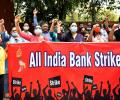
The government can also individually exempt the PSBs, that are to be privatisated from the two Bank Nationalisation Acts. This will bring such lenders under Banking Regulation Act, and make them companies, reports Nikunj Ohri.

There is widening gap between what the government's premier retirement fund makes on its investments and what it offers to employees. The Employees' Provident Fund Organisation (EPFO) makes the bulk of its investments in government-related securities. In other words, it lends to central and state governments and related entities. The interest it gets from these instruments is largely what it uses to pay interest to its subscribers.
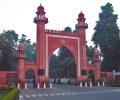
These self-appointed well-wishers of AMU are basically for the control or police model of university governance. They have no faith whatsoever in the democratic functioning of the universities, observes Faizan Mustafa, former dean, Faculty of Law, and Registrar, Aligarh Muslim University.

'Somebody was using somebody to make statements that will stir the stock market and lead to a surge.' 'A sudden surge and a sudden crash is always an ideal situation for people to make illicit gains and then siphoning off the money.'
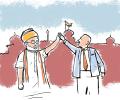
The Centre is likely to privatise profit-making enterprises, reversing its previous position of first closing or merging loss-making state-run units. The NITI Aayog, which is in the process of selecting public sector units for privatisation, is likely to put out its first list, focusing on companies in non-strategic sectors, along with those that have got Cabinet approval for stake sale, or are in final stage of due diligence. "The shortlisted firms will be put out in three-four tranches, with the first list comprising non-strategic ones, followed by strategic sectors with a focus on privatisation and not divestment," said a senior government official privy to the plan. He said the first report was expected in early April. The think tank approach is in sync with the government's new strategies on privatisation and asset monetisation.
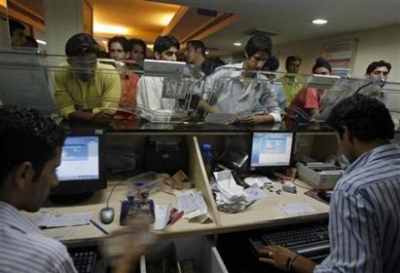
Private banks are assumed to be more efficient at intermediating between depositors and investors.

'The BJP's numbers in this government are almost the same as those enjoyed by the Congress under P V Narasimha Rao when the reform process was kicked off in 1991.' 'As before, the only constraints on the prime minister's actions are internal, not external.' 'They come from his own assessment of the political consequences of any action,' points out Mihir S Sharma.

Finance Minister Nirmala Sitharaman on Tuesday said monetisation of Central Public Sector Enterprises (CPSE) assets is based on the principle of value creation for the government and investors and would bring about a paradigm shift in infrastructure augmentation and maintenance. Chairing the National Workshop with the states/UTs on Asset Monetisation organised by Niti Aayog, the minister sought the collaboration of states for the holistic development of infrastructure. She said India can become a $5 trillion economy, while striking the right balance between fiscal imperatives and socio-economic welfare, through active collaboration between the public and private sector.
The push given to rooftop solar installation in the Interim Budget ties in with its high rate of adoption in Tier-II and -III cities of India. If original equipment manufacturers (OEMs) in the automobile industry, government, and the solar sector are to be believed, in cities of Rajasthan, Gujarat, and Kerala, 45-50 per cent of electric-vehicle (EV) users are employing rooftop power to charge their vehicles. This is compared to the national average of 25 per cent, say industry sources.

China is likely to deploy Artificial Intelligence-generated content via social media to sway public opinion to boost its geopolitical interests during elections in countries like India, South Korea and the US, tech giant Microsoft has warned.

The BJP had not filed till May the expenses statement for the Karnataka Assembly elections held last year in July.
The power sector is always strongly correlated to economic activity and is receiving its share of investor attention as India's post-Covid-19 recovery continues. India's leading integrated power producer, the public sector undertaking (PSU) NTPC controls around 25 per cent of India's power capacity. It continues to increase installed capacity, in thermal as well as renewables (solar, wind, green hydrogen) and hydropower and pumped hydro, and also has backward integration into coal mining, and explored nuclear.

'To the believers of crypto regulations, I have only one question to ask, how will you regulate it?'

As part of the "Atmanirbhar Bharat" (self-reliant India) package, the central government had announced on May 16 last year that it would improve autonomy, accountability and efficiency in ordnance supplies by corporatisation of the OFB.

The Rs 12,450 crore capital infusion will enable the three public sector general insurance companies to improve their financial and solvency position, meet the insurance needs of the economy, absorb changes and enhance the capacity to raise resources and improve risk management.

The loss to policyholders due to massive mis-selling of insurance policies by trusted private sector and public sector banks will be well in excess of Rs 2 trillion, warns Harsh Roongta.

'The impact of CEO transition is fairly even for stocks, with about half (53 per cent) of the events not producing any change in the relative performance of the stock.'
'I think some of us, like Mukesh Ambani, myself and those of us who head industrial units, ought to really focus on what we can really do to make the world a safer place, maybe 50 or 100 years from now.' 'For instance, how can we deal with climate change and global warming, right now?' 'The effects of it may not be felt now; in fact, we may pay a price for it today, but it will help the generations to follow.'

The IPL uses this system for players' auction.

It is speculated that 5-10 per cent of the PSU cash reserves of up to Rs 1,20,000 crore (Rs 1200 billion), will flow into the three PSU fund houses.
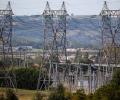
To tackle increasing demand, the Union Ministry of Power has urged central and state public-sector power-generating companies (gencos) and state power and energy departments to pick projects that are undergoing insolvency proceedings. The power ministry is looking at a quicker turnaround of these stressed power plants and enhancing power supply. Increasing demand is pushing states to scout for more power sources. "It is requested that state-owned gencos may be encouraged to participate in the corporate insolvency resolution process (CIRP) of stressed power assets, which are of strategic and commercial significance to the capacity addition plans of the states concerned.

'Not even a single rupee from the electoral bonds should be allowed to be used in the election.' 'If it is used in the election, it will taint India's electoral process itself.'

The Delhi Police said it has conducted a thorough check of all schools that received the bomb threat but found nothing.

Most expect the Budget to be path-breaking.

The government has an opportunity right now to save Indians from deep recession, and in many cases, starvation, notes Kalyan Singhal.

Apart from 40 modules of Harvard, SBI has internally developed 500 e-modules for employees.

The finance minister has emphasised on the quick disbursal of additional loans to MSMEs, to simplify process, formats and documentation.

The finance minister has said that United Bank has managed to reduce its non-performing assets.

Marking the end of strict banking secrecy practices, Switzerland earlier this month agreed to automatic exchange of information and mutual administrative assistance in tax matters with overseas authorities.

The incident remains a reminder of the inherent fragilities of all geopolitical relationships.
